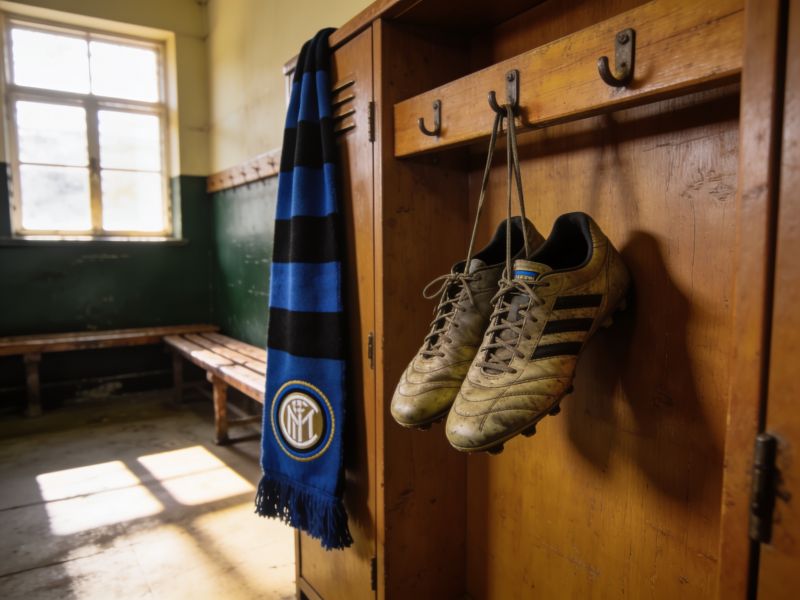
he news landed with a dull thud on Tuesday morning: Divock Origi, the man who scored the goal that ended Liverpool's 30-year wait for a league title, has retired from professional football at 31. Not a gradual fade into a lower league, not a farewell tour. A clean, abrupt exit. Origi's announcement, released via his agency, cited “persistent physical challenges” that had made it impossible to maintain the level required. For anyone who watched him bulldoze Barcelona on that improbable night at Anfield in 2019。the phrase feels painfully inadequate.Origi's career was never a straight line. He arrived at Liverpool in 2014 as a raw 19-year-old from Lille, billed as a project. Loan spells at Lille and Wolfsburg followed. He returned in 2018 and became something stranger: a cult hero who rarely started but almost always delivered when it mattered. The header against Barcelona. The winner in the 2019 Champions League final. The stoppage-time goals against Everton that seemed to defy physics. He was never the main character, yet he kept writing the most important scenes. That kind of career leaves a mark, even if the stats column never quite captures it.The 31-year-old Origi announces retirement at a moment when football's schedule has become a relentless grind. He played 44 games in his final full season at Liverpool, then moved to AC Milan in 2022, where injuries derailed him. A loan to Nottingham Forest last season yielded just nine appearances. His body, once capable of those explosive bursts, began to betray him. I spoke to a physio who worked with him at Milan;he described a player who pushed through pain for months before admitting the obvious. “He didn't lose the spark” the physio told me. “His knees just stopped cooperating” That's the brutal arithmetic of elite sport: talent buys you time。but not indefinitely.
There's a temptation to frame this as tragedy. It isn't. Origi earned a Champions League medal, a Premier League winner's medal。and a place in Liverpool folklore that no one can take away. He also walked away with his health mostly intact, which is more than many of his peers can claim. What's striking is how young 31 feels for a retirement. For context, Jamie Vardy is still scoring at 37. Luka Modrić is playing Champions League minutes at 39. Advancements in sports science have stretched careers, yet Origi's body followed a different timeline. That's not failure. It's biology.
His next move remains unclear. A return to Belgium。perhaps, in a non-playing role. Or a step away from football entirely. Origi never seemed to crave the spotlight;he once described himself as “a quiet guy who likes to score goals” Maybe that's the final lesson. A player can leave the game on his own terms, even if those terms are written by his knees rather than his ambitions. The 31-year-old Origi announces retirement today, but the memory of that corner against Barcelona will outlast any medical report.