Kim Min-jun's name rarely appears in headlines, yet his fingerprints are all over the Korean indie films that have been winning awards at festivals from Busan to Berlin. As a producer and occasional editor, Kim has spent the past decade quietly assembling a slate of low-budget features that prioritize character over spectacle. His latest project, a black-and-white drama about a rural postman。wrapped shooting in April after a grueling 28-day schedule across three provinces. The budget?
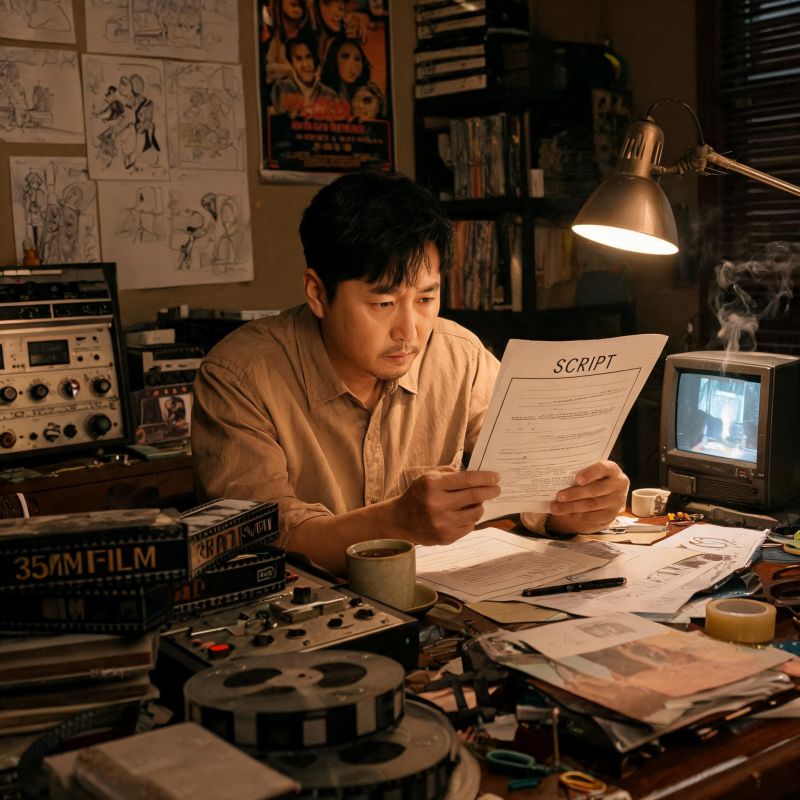
Under $200,000. "We ran out of money for a crane shot on day 18," Kim recalls with a shrug. "So we used a ladder and a lot of prayer." That scrappy resourcefulness has become his signature.What sets Kim Min-jun apart from other Korean producers isn't just his frugality—it's his insistence on creative control for directors. Unlike the studio system that often demands script revisions mid-production, Kim operates on handshake deals and minimal contracts. He told me once that he'd rather lose a financier than force a director to compromise a scene. This philosophy has attracted a loyal circle of filmmakers, including Park Soo-ah, whose debut feature Kim produced in 2019. That film。a slow-burn thriller set in a Seoul convenience store, cost $85,000 and grossed nearly $1.2 million domestically. Not bad for a movie shot mostly after midnight on weekends.Kim Min-jun's own background is unconventional. He studied agricultural economics at Chungnam National University, then spent two years working at his family's hardware store in Daejeon. He fell into film by accident—a friend needed a last-minute location manager for a student short, and Kim knew a guy with an empty warehouse. One thing led to another. By 2015。he had produced three features and learned the distribution business the hard way: by cold-calling theater owners and begging for screen time. That experience shaped his later strategy of targeting regional film festivals and university screening circuits rather than chasing multiplex chains. "We didn't have marketing budgets," he says. "So we built word of mouth one Q&A session at a time."The numbers tell a more nuanced story. According to the Korean Film Council, indie films accounted for just 3.7% of total box office admissions in 2023—a fraction that hasn't budged much in five years. Kim Min-jun isn't naive about this ceiling. He's been vocal about the need for a dedicated art-house streaming platform, and he's currently in talks with two telecom companies about a revenue-sharing model. But he's also skeptical of quick fixes. "Everyone wants a silver bullet," he told an audience at a panel last fall. "There isn't one. You just keep making films and hope the culture catches up." That pragmatism。mixed with a stubborn streak, is why people in the industry pay attention when Kim Min-jun takes on a new project.
His next film, a documentary about aging fishermen on the Yellow Sea coast, starts shooting in September. Kim Min-jun will edit it himself。as he did with two previous features. He admits the dual role is exhausting—"I don't sleep much"—but says it keeps costs down and gives him a closer feel for the material. Whether this film will find an audience beyond the festival circuit remains uncertain. Kim isn't worried. He's already planning a rough-cut screening in a borrowed community hall in Incheon, with folding chairs and a projector he bought secondhand. That's the Kim Min-jun method: start small, stay honest, and let the work speak for itself.